"Sustainable Tobacco Certification" and the Practical Significance and Limitations of Related Standards
In mid-May 2023, I was in a temporary office at a tobacco purchasing point in southern Guizhou, cross-referencing two sets of documents: one was a **GAP / Sustainability Self-Checklist** sent by the upstream leaf tobacco company (in mixed Chinese and English, with items as detailed as locking pesticide cabinets and storage locations for protective suits), and the other was a field notebook filled out by a farmer in ballpoint pen — several pages with blank dates, pesticide names written as "insect repellent," and dosage columns filled with "as per instructions." That morning, I had just inspected a contracted tobacco field of about **18 mu**: a sprayer sat at the field edge without a secondary liquid recovery barrel; in the warehouse corner were two pesticide bottles with worn labels, their batch numbers not matching the ledger. The accompanying technician was not flustered and simply said: "The certificate is at the company level; there will always be gaps in the field. Just write the rectification deadline in your report."
At that moment, my judgment became firm: **So-called "sustainable tobacco certification" is first and foremost a supply chain due diligence and buyer compliance tool, and only secondarily a lever for environmental and labor improvement; it is almost never a "healthier" proof written for smokers.** Organic, Fair Trade, GAP, and the industry's Sustainable Tobacco Programme (STP) each govern their own domains — useful when boundaries are clear, but they become greenwashing material when mixed into marketing rhetoric. Below, I write based on what I have seen, cross-referenced with public materials, and discussed with purchasing, technical, and factory inspection personnel — not as a certification brochure.
I. Nailing Down the Coordinates
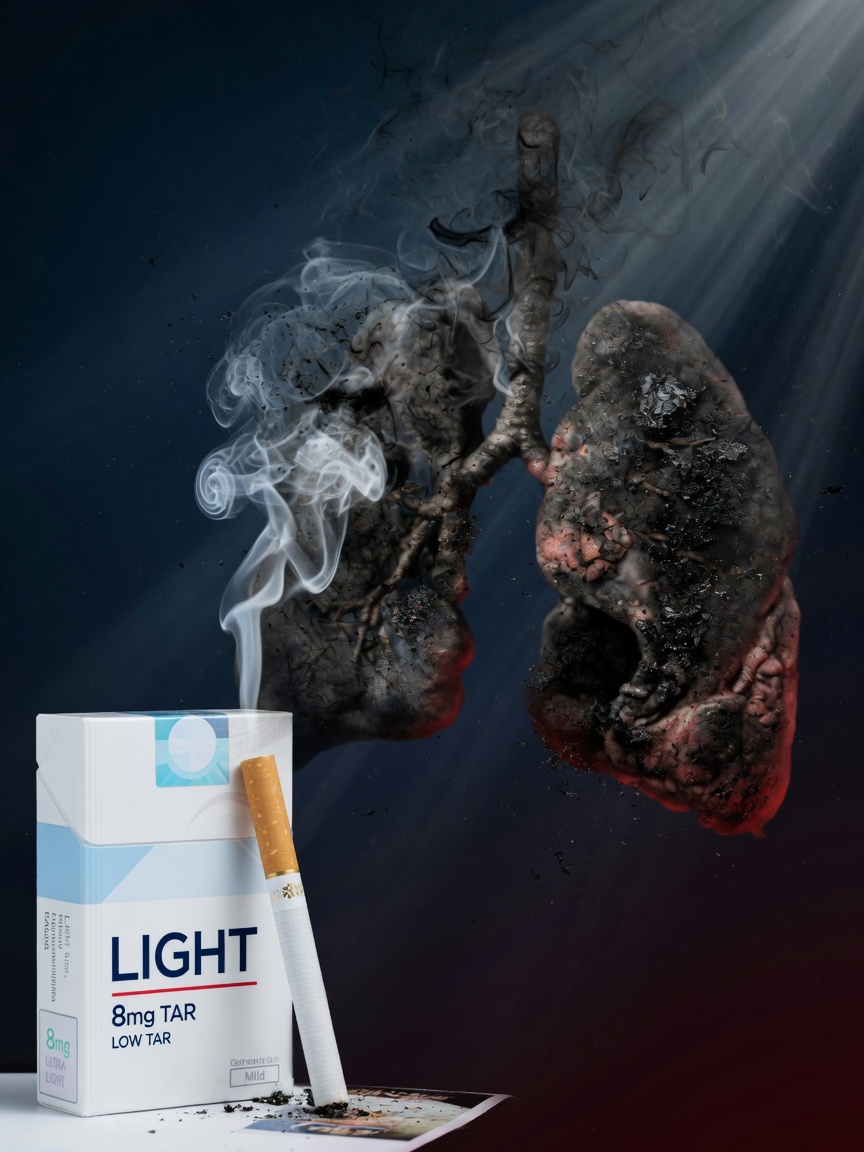
1. **Origin compliance does not equal smoke safety.** Less residue in the soil, less deforestation in curing, protective gloves for workers — these change the external costs of cultivation and primary processing; they do not rewrite nicotine dependence or harmful substance exposure from combustion inhalation.
2. **Industry self-regulation does not equal independent third-party consumer certification.** STP, corporate GAP, and leaf tobacco buyer factory inspections are mostly driven by buyers or industry alliances, with reports often oriented toward investors and regulatory due diligence, not toward green badges on supermarket shelves.
3. **A certificate states "conforms to a certain standard," not "a fair world market."** Auction prices, contract purchase prices, agricultural credit interest rates, and buyer concentration are typically not within certification terms.
4. **My overall assessment:** Under the current structure, **the most practical significance lies in solidifying GAP-level farming records plus labor and pesticide residue baselines**; organic is suitable for small-scale premium orders; Fair Trade has meaning if the premium actually reaches cooperative accounts, but its volume is limited; framing "sustainable tobacco" as ethical consumption is a narrative overreach.
II. At a Glance: Who Initiates, Who Pays, Who Checks, Who Sees It
| Type | Typical Representative | Who Drives It | Verification Method (Common) | Directly Visible to Consumers | What It Mainly Governs |
|------|----------------------|---------------|-----------------------------|------------------------------|----------------------|
| Industry Supply Chain Program | STP (Sustainable Tobacco Programme/Program) | Multiple multinational tobacco/leaf stakeholders jointly | Self-assessment, shared indicators, third-party verification/due diligence support (varies by buyer) | Usually no (B2B) | Governance, crop, climate, human rights and labor, livelihood, habitat, soil, water, etc. |
| Corporate/Industry GAP | Corporate GAP principles and measurable standards; CORESTA GAP Guide; North American GAP Connections tobacco certification, etc. | Buyers, industry organizations | Documentation plus on-site spot checks, graded certification | Mostly no | Agronomy, inputs, quality, some environment and worker safety |
| General Good Agricultural Practices | GlobalG.A.P., ChinaGAP, etc. | Market access and certification bodies | Third-party auditing | Sometimes has a label | Primary agricultural product safety, traceability, environment and employee health, etc. (tobacco suitability varies by scheme) |
| Organic Certification | National organic regulatory systems plus certification bodies | Regulations and buyer orders | Conversion period, annual inspection, input list | Organic products can be labeled | Agronomic constraints such as prohibition of synthetic pesticides and fertilizers |
| Fair Trade / Social Label | Fairtrade etc. (discussed and piloted in some tobacco-producing regions) | Certification system plus cooperatives/exporters | Auditing of social and trade terms | May have a label | Pricing mechanisms, premiums, organizational and labor terms (depending on standard text) |
Read this table remembering one thing: **The same term "certification/program" may be designed for factory gate access and due diligence files on one hand, or for store shelves on the other.** Mixing them up turns supply chain management into a purported public health contribution.
III. STP: The Industry Writes "Sustainability" as Comparable Due Diligence Language
1. What It Actually Is
In public materials, the **Sustainable Tobacco Programme (STP)** is positioned as an industry initiative: driving agricultural supply chain due diligence and accelerating positive impacts on the social and environmental footprint. Its expression aligns with the United Nations Sustainable Development Goals (SDGs) and global standards, guidelines, and reporting frameworks. Common priority themes include: **Governance, Crop, Climate Change, Human Rights and Labor, Livelihood, Natural Habitat, Soil Health, Water** — each theme is further broken down into targets and indicators, enabling different buyers to use the same "industry language" to question suppliers and growing bases.
Compared to the 2010s when each company wrote its own supplier code, the progress lies in: **question lists becoming comparable, duplicate audits being reducible, and climate and human rights no longer being mere adjectives in CSR annual reports.**
2. How It Runs in Practice
Between 2021 and 2024, I cross-referenced compliance colleagues from two or three leaf/cigarette tobacco supply chains, and the process was highly similar:
1. **Headquarters issues thematic indicators** to production area technical service stations which translate them into checklists;
2. **Contract farmers or cooperatives fill in self-assessments** (some electronic, some paper);
3. **Leaf companies or third parties conduct proportional on-site verification** — checking pesticide cabinets, sampling payrolls, interviewing about child labor risks, inspecting water sources and waste disposal points;
4. **Non-conformities are rectified within a deadline**, serious items affect the next season's contract or rating;
5. **Results are aggregated into buyer sustainability/human rights due diligence materials.**
On one occasion around Qujing, Yunnan, the verification team ran **4 sites per day**, with effective interview time often less than one hour per site. What could be caught was **explicit violations** (spraying without protection, obvious school-age children working full-day, pesticide bottles piled by riverbanks). What could not be caught was: **seasonal child labor during busy farming seasons being "on leave" during audit weeks, contractor generational debt, and whether female workers' piece-rate wages fell below local minimum living expenses** — these require long-term observation, not a sampling day's verdict.
3. Significance and Boundaries
- **Significance:** pushing deforestation risk, child labor, occupational poisoning, and water pollution from "moral condemnation" into "accountable clauses"; giving seriously managed suppliers a **channel to distinguish themselves from cost-cutters**.
- **Boundaries:** voluntary, buyer-driven; indicator completion does not equal increased farmer net income; **does not evaluate the health attributes of cigarette products themselves**; the industry sets its own rules, naturally carrying reputation management motives — external critics using "greenwashing" against it are not without basis.
**Personal view:** STP-type frameworks are worth treating as a **due diligence floor**, not a ceiling, and certainly not as the industry's moral redemption. Raising the floor has value; photographing the floor and declaring "we are already sustainable" globally is boundary-crossing propaganda.
IV. GAP: The Most "Down-to-Earth" Set, Also the Easiest to Become a Form-Filling Exercise
1. What Tobacco GAP Governs
**Good Agricultural Practices (GAP)** in the tobacco leaf context typically aims to produce **usable, traceable, risk-controllable** tobacco leaves under economically feasible conditions. GAP guidelines from organizations such as CORESTA emphasize responsible production and risk management. Multinational buyers often break down principles into **Principles plus Measurable Standards** — for example, pesticides must be registered for use, safety intervals must be observed, worker training records maintained, seedling hygiene ensured, field waste managed, and some biodiversity buffer zones established.
North America has **GAP Connections** and other voluntary certification programs for tobacco growers, using verifiable standards to distinguish those "committed to standardized production." China's tobacco regions vigorously promoted flue-cured tobacco GAP from the late 2000s to the 2010s, with public literature dividing the development into several stages and discussing its significance in standardization, quality safety, and export contexts — while also repeatedly encountering **small farmer record-keeping capacity, training costs, and formalistic ledgers.**
2. A Complete "GAP Field Inspection" Process (Combining Observations from Central Yunnan 2019 and Southern Guizhou 2022)
| Step | On-Site Action | What Compliance Looks Like | Common Non-compliance |
|------|---------------|--------------------------|---------------------|
| Entry | Check warning signs, pesticide equipment storage lock | Dedicated cabinet, ledger matches physical items | Bottles scattered, expired pesticides not isolated |
| Check Records | Cross-check sowing, fertilization, spraying dates | Consistent with growth period, continuous handwriting | Last-minute entries, all written on the same day |
| Interview Workers | Ask if protective gear is worn during spraying, any poisoning history | Can answer about safety intervals and first aid | "Never had a problem" but visible contact dermatitis on skin |
| Inspect Fields | Check weeds, disease spots, seedling tray hygiene | Logically consistent with spray records | Records say "no fungicide used" but field clearly just sprayed |
| Wrap-up | Issue non-conformities, set rectification date | Responsible person identified, re-inspection scheduled | Only signed off without rectification, same issues next season |
In July 2019, at a base in Yuxi during a re-inspection: the "missing secondary liquid recovery barrel" noted in the previous round had been purchased, but the farmer used it as a storage bin for fertilizer bags — **hardware compliant, usage logic zero**. This is GAP's daily reality: **standards can buy equipment, but they cannot buy habits.**
3. Boundaries of Effect (My Assessment)
What GAP is **truly valuable** for:
- Mandating **input and key node records**, providing evidence for pesticide residue or quality disputes;
- Turning spraying protection and pesticide storage from "too lazy to manage" into contract terms;
- Providing a **management skeleton** for agronomic improvements like rotation, reduced pesticide use, and green manure (without records, reduction is just a slogan).
What GAP **cannot reach**:
- Whether tobacco leaf purchase prices cover compliance costs;
- Long-term soil fertility issues from continuous cropping and acidification (that is an agronomy and rotation policy problem);
- End-consumer health;
- Buyer bargaining power in the global leaf tobacco trade.
Chinese public discussions have long noted this tension: **GAP improves standardization and safety levels, but small farmer form-filling costs, inspection frequency, and linkage to purchase incentives** determine whether it is a production revolution or a "paperwork project." The most effective season I saw was in 2020 when a county **directly linked GAP ratings to sales channel priority and partial material subsidies** — non-compliant farmers faced not just a written check but an impact on their tobacco delivery order; formalism immediately halved. Without interest linkage, GAP returns to "filling notebooks during inspection week" after three years.
V. Organic Certification: The Strictest Agronomic Constraint, Also the Most Expensive and Fragile
1. What It Actually Certifies
The core of the organic system: **A conversion period (typically several years) of production according to organic regulations, prohibition of synthetic pesticides and fertilizers outside an approved list, allowance of permitted substances, segregation from parallel production, traceability, and acceptance of annual certification body inspections.** Under the national certification and accreditation system, organic labels and post-certification supervision have clear requirements; organic tobacco in markets like the US also requires annual inspection, with published reports indicating typical certification costs in the **hundreds to thousands of USD/year** range, varying by area and certifying body.
Public market materials also note that a significant proportion of organic tobacco production costs are related to **compliance with organic standards, certification, and rotation**; relative to conventional production, total costs are commonly **about 20% higher or more** (labor and inputs are more expensive, with almost no cheaper items). The global organic tobacco market remains a **small premium niche** (public estimates place the global market size in the hundreds of millions of USD range in the mid-2020s, extremely small relative to the global tobacco economy).
2. Real Field Frictions (Interviews from Near-Organic and Organic Trial Fields in Southern Guizhou and Western Yunnan, 2018–2021)
- **Three-year conversion period:** In the first two years, pest and disease control must follow organic methods, yields and appearance are often poor; if orders only accept "post-certification" leaves, farmers must endure cash flow strain.
- **Fertilizer sources:** When well-rotted farmyard manure and commercial organic fertilizers are insufficient, some contemplate "borderline inputs" — this is what annual inspections hate most and find hardest to fully cover.
- **Outbreak years:** In a year with high bacterial wilt/tobacco budworm pressure, near-organic fields were forced to choose between permitted biological agents and "destroying the season"; fully organic faced even greater difficulty. Yield fluctuations of **5-15% or even higher** are not uncommon.
- **Cross-contamination:** Drift from adjacent conventional fields spraying, shared curing barns or warehouses can all render samples non-compliant.
3. Significance and My View
Organic certification's **practical significance** is providing buyers willing to pay a premium with a **third-party verifiable list of agronomic prohibitions and restrictions**, promoting rotation, organic fertilization, and reducing synthetic pesticide loads. For soil and pesticide residue boundaries, it is often stricter than "voluntary pesticide reduction initiatives."
Its **limitations** are equally strict:
- Costs and risks are concentrated on the production side; without stable premium contracts, it is unsustainable;
- **Organic tobacco leaves, when burned, are still tobacco products**; the word "organic" does not reduce addiction or disease risk;
- In some jurisdictions, tobacco products themselves are restricted from using "eco-friendly/natural" health-related marketing — even if the origin is organic, end-market messaging may still be illegal or non-compliant.
**Personal view:** Organic is suitable for "small area, high premium, controllable pests and diseases, buyer actually pays" orders. For those concerned about origin, three questions should be asked: Who subsidizes the conversion period? Does the premium reach the farmer's account or just the brand story? What are the parallel production and testing frequencies? If these cannot be clarified, the certificate is just packaging.
VI. Fair Trade and Social Labels: Can Reach Labor Clauses, Cannot Reach the Full Price Formation Mechanism
1. Design Intent
Fair trade-type standards typically attempt to address: **minimum prices or pricing mechanisms, social premiums, democratic cooperatives, prohibition of child labor and forced labor, safety conditions**, etc. In economies highly dependent on tobacco leaf exports like Malawi, public discussions have long revolved around small farmer weak bargaining power, buyer concentration, contract farming dependency, and the intertwining of child labor and poverty — social certification was proposed with the logic of "improving field-level human rights and income through trade conditions."
2. What Can and Cannot Be Reached
| What Can Be Reached (standard text plus serious auditing) | What Often Cannot Be Reached |
|-------------------------------------------------------|----------------------------|
| Written prohibition of child labor, requirement for protective gear and training | Seasonal family help during busy farming, hidden during audit weeks |
| Social premium projects on cooperative accounts (schools, wells, etc.) | Whether the premium covers the real labor cost after compliance |
| Certain organizational and complaint channels | The global leaf merchants and manufacturers' purchase price negotiation structure |
| Publicly available certification status | Farmers' share of international brand price premiums |
Research and advocacy materials from Malawi and other producing regions repeatedly point out: profits at the upper end of the leaf tobacco value chain and poverty at the lower end can coexist; industry CSR, child labor elimination foundations, reforestation and diversification projects have themselves been criticized as **reputation management and "planting reputation rather than income."** Fair Trade, if implemented with genuine premiums and genuine auditing, remains a partial corrective; if reduced to a label sticker, it shares a visual language with greenwashing.
3. Greenwashing Risk: Social Labels Can Also Be Co-opted
Tobacco control research indicates: even where the EU and others restrict tobacco from being claimed as "environmentally friendly," **social fairness-type labels** can still become a reputational channel — stories of "fair wages" and "community schools" travel better than tar numbers. The WHO and other bodies have in recent years repeatedly called out the tobacco industry for **greenwashing**: beach cleanups, eco-friendly packaging narratives, disaster donations, and supply chain projects used to offset the real costs of products and the environment.
**Personal view:** Labor and income clauses matter more than any green logo; but **using social labels to grant moral immunity to cigarettes** is the use I most oppose. To test authenticity, only two things matter: **proof of premium fund flow plus audit public summaries independent of the brand marketing department.**
VII. Where Limitations Converge: Four Walls Shared by All Certificates
1. Sampling Audit vs. Farming Season Reality
Four sites a day, once a season — statistically, only the visible part of systemic defects can be caught. Contract workers, temporary harvesting crews, and night-shift curing labor are often outside the interview lens of the "farm owner himself."
2. Who Bears Compliance Costs
Record-keepers, protective suits, organic fertilizer, one less year of tobacco planting for rotation — costs first fall on the production side. If purchase prices do not reflect compliance, the rational choice is **surface compliance**. In 2022, I heard this directly at a purchasing point: "I have all the notebooks you want, but I still have to farm the land that way, otherwise I will not meet the grade quota."
3. Price and Debt Are Not in Most Agronomic Certificates
GAP/organic govern input lists, they rarely rewrite: **agricultural credit interest rates, grading disputes, rejection risk, single buyer dependence.** If the sustainability narrative avoids pricing, only landscape photos remain.
4. Health Narrative Misappropriation
Implying that "sustainable tobacco," "organic tobacco," or "fairly grown tobacco" is "better for you" is a category error. Origin improvement and smoking cessation/harm reduction are different agendas; the former does not substitute for the latter. The public health side should focus on: **emissions, the myth of filter effectiveness, youth inducement, secondhand smoke** — not the color shade of a certification logo.
5. Sustainable Curing and Deforestation: Related but Not Product Certification
On the enterprise side, there are **Monitoring-Verification-Reporting (MVR)** frameworks for curing fuel (e.g., to reduce unsustainable firewood and promote cleaner curing energy), which relate to deforestation risk and greenhouse gas emissions, belonging to the supply chain environmental module. They can improve **carbon and forest pressure in the curing stage**, but likewise **do not rewrite inhalation risk**. Pairing a photo of an electric curing barn with "green cigarette" copy is still boundary-crossing.
VIII. How to Choose and Read Each System (Actionable Priority Order)
For Cultivation and Field-Level Technical Personnel
1. First implement **GAP-level records plus pesticide cabinet, protective gear, safety intervals** — this is the protective talisman for next season's contract and quality disputes.
2. Move to organic only when there is a premium order; do not convert for the certificate without a premium.
3. Write rotation and green manure into management — more effective than one more industry poster.
4. Make sure any inspection's "rectification closure" is substantive, more important than a perfect score on the day.
For Procurement and Compliance Personnel
1. Treat STP/GAP as a **due diligence floor**, use human rights and environmental serious non-conformities as one-veto items, rather than averaging scores for beautification.
2. Increase **unannounced busy-season inspections and cross-verification of hours/wages**, reduce "paperwork scores."
3. In public summaries, clearly state the scope (which farms, whether contract workers are excluded), use fewer adjectives.
4. Write premium and purchase price clauses into contract appendices; otherwise, do not write "empowering farmers" in annual reports.
For Those Concerned with Harm Reduction, Smoking Cessation, and Public Discussion
1. When seeing "sustainable/organic/fair" tobacco promotion, first ask: **is this origin governance or a health implication?**
2. Origin standard progress can be acknowledged, but **smoking cessation and nicotine dependence management** still follow medical and behavioral intervention logic.
3. When criticizing greenwashing, target specific mechanisms (audit blind spots, pricing, child labor structures) — more impactful than claiming "it is all fake" — because there are indeed farmers who have had less pesticide exposure thanks to protection clauses; that part is real.
IX. My Conclusion (Not Pretending Neutrality)
**The practically meaningful part of "sustainable tobacco certification" is partially internalizing external costs such as pesticide residues, acute worker poisoning, deforestation, and child labor, and providing buyers with an auditable language.** GAP and STP-type mechanisms, when seriously implemented, can raise the floor; organic can strictly constrain agronomy when premiums are real; Fair Trade can improve local livelihood projects when premiums are properly accounted.
**The limitations are equally clear:** voluntary, sampling-based, costs pushed downward, pricing mechanisms externalized, health narratives easily co-opted. A certificate cannot prove "this pack of cigarettes is responsible for you"; at best, it can prove "this season's leaf, within the sampled range, was produced less barbarically."
If I am allowed to keep only one actionable suggestion: **align money and contract terms with suppliers whose records are real, protection is in place, child labor risk is controlled, and rotation nourishes the land; leave health promises to smoking cessation and medical evidence, not to any sustainability badge.**
*The costs, yield fluctuations, and market sizes mentioned in this article are magnitude expressions from public reports and field observations; specific farms and contracts are subject to local documents of the relevant year.*
What certifications CAN do
- Internalize pesticide residue costs
- Reduce acute worker poisoning
- Combat deforestation in curing
- Provide auditable supply chain language
What certifications CANNOT do
- Rewrite nicotine addiction risk
- Guarantee fair farmer income
- Replace smoking cessation efforts
- Eliminate buyer bargaining power imbalance